Many people believe that people pleasing is simply about being nice, avoiding conflict, or wanting others to be happy.
The truth is often much deeper.
The fear of loneliness behind people pleasing is one of the most common emotional patterns I encounter in my work as a psychotherapist. Beneath the constant need to adapt, accommodate, and keep others comfortable often lies a much deeper fear: the fear of rejection, abandonment, disconnection, and emotional loneliness.
In this article, we explore why people pleasing develops, how it impacts your mental health and relationships, and what you can do to begin reconnecting with your authentic self.
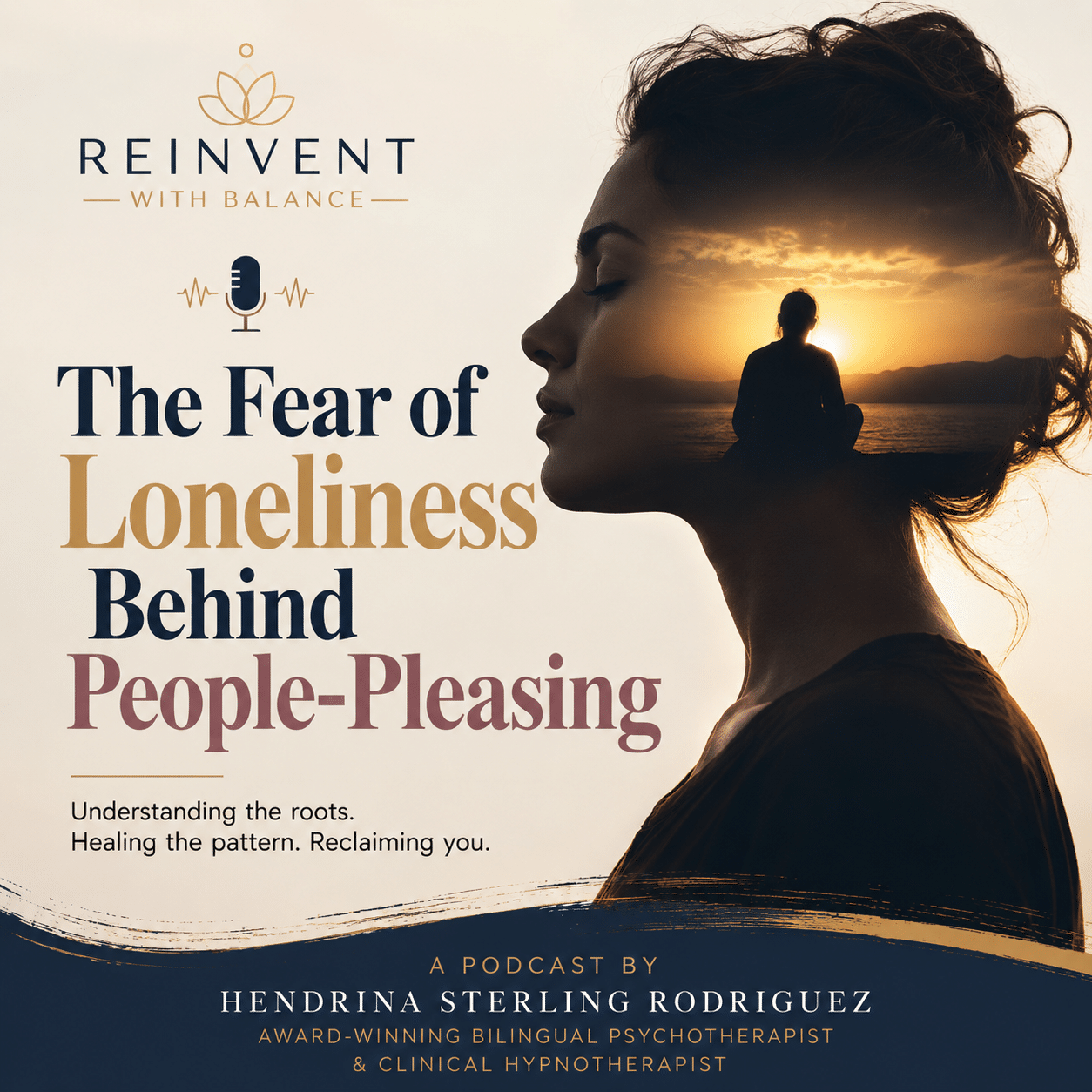
If you prefer listening, you can also explore this topic in greater depth on my podcast, Reinvent With Balance.

Table of Contents
- What Is the Fear of Loneliness Behind People Pleasing?
- Why People Pleasing Develops
- 7 Signs You May Be Abandoning Yourself
- The Difference Between Solitude and Emotional Loneliness
- Why Boundaries Feel So Difficult
- How to Stop People Pleasing Without Losing Relationships
- Reflective Questions for Self-Discovery
- Continue Your Journey with Echo Journey™
What Is the Fear of Loneliness Behind People Pleasing?
The fear of loneliness behind people pleasing occurs when your nervous system learns that connection, acceptance, and safety depend upon keeping other people happy.
Instead of asking:
“What do I need?”
You begin asking:
“What do they need from me?”
Over time, your identity can become built around emotional adaptation rather than emotional authenticity.
Many people do not realise that their behaviour is not driven by kindness alone. It is driven by a deep desire to preserve attachment and avoid emotional pain.
The fear of loneliness behind people pleasing often develops gradually and becomes so normal that it feels like part of your personality.
Why People Pleasing Develops
People pleasing frequently develops in environments where love, approval, or emotional safety felt conditional.
Examples include:
- Highly critical households
- Emotionally unpredictable caregivers
- Environments where conflict felt unsafe
- Relationships where approval had to be earned
- Family systems built around guilt or obligation
As a result, the nervous system learns an important lesson:
“If I upset people, I may lose connection.”
That belief can continue influencing relationships for decades.
7 Signs You May Be Abandoning Yourself
1. You Struggle to Say No
Even when you are exhausted, overwhelmed, or emotionally depleted, saying no feels uncomfortable.
You worry about disappointing people.
2. You Over Explain Yourself
Simple decisions become long explanations.
You feel responsible for making everyone understand and approve of your choices.
3. You Prioritise Everyone Else’s Needs
Your needs consistently move to the bottom of the list.
Eventually, resentment begins to build.
4. You Fear Conflict
Disagreements feel emotionally threatening.
You may remain silent even when something hurts you.
5. You Feel Responsible for Other People’s Emotions
You monitor moods, reactions, and tension constantly.
You become emotionally hypervigilant.
6. You Find It Difficult to Receive Support
When someone offers help, you immediately say:
“I’m fine.”
“I’ll manage.”
“I don’t want to be a burden.”
7. You Feel Emotionally Exhausted
The fear of loneliness behind people pleasing often leads to chronic emotional fatigue because you are constantly managing both your own emotions and everyone else’s.
The Difference Between Solitude and Emotional Loneliness
Many people confuse being alone with being lonely.
They are not the same thing.
You can be physically alone and feel deeply connected.
You can also be surrounded by people and feel profoundly lonely.
The fear of loneliness behind people pleasing is often not about physical solitude.
It is about emotional belonging.
It is the fear that if you stop adapting, you may no longer be accepted.
Why Boundaries Feel So Difficult
Healthy boundaries are not about rejecting others.
They are about protecting your wellbeing.
Yet for many people, boundaries trigger anxiety because boundaries challenge old survival patterns.
If your nervous system learned that approval equals safety, setting boundaries can initially feel dangerous.
The good news is that boundaries become easier with practice.
They help create relationships based on authenticity rather than emotional performance.
How to Stop People Pleasing Without Losing Relationships
The goal is not to become cold or disconnected.
The goal is to become authentic.
Here are a few starting points:
Notice Your Automatic Yes
Pause before agreeing.
Give yourself permission to think.
Ask Yourself What You Need
Begin checking in with your own emotions before focusing on everyone else’s.
Practise Small Boundaries
Start with low-risk situations.
Boundaries become stronger through repetition.
Build Relationships That Support Authenticity
The healthiest relationships are not those that require constant adaptation.
They are the ones that allow you to be yourself.
Reflective Questions for Self-Discovery
Take a few moments to reflect:
- Who leaves your nervous system calmer?
- Who leaves you emotionally drained?
- Where do you feel most authentic?
- Where do you feel you must perform?
- What would change if you stopped managing everyone else’s emotions?
- Are you preserving attachment at the cost of yourself?
These questions can create powerful insights and help you begin recognising the fear of loneliness behind people pleasing in your own life.
Continue Your Journey with Echo Journey™
Self-awareness does not happen through information alone.
It happens through reflection.
That is why I created Echo Journey™, a reflective companion designed to help individuals explore their thoughts, emotions, patterns, dreams, triggers, and personal growth through guided reflection and journaling.
Echo Journey™ provides a gentle space to pause, gain clarity, and reconnect with yourself.
Whether you are navigating anxiety, relationship challenges, emotional overwhelm, or a period of personal transformation, reflection can become a powerful tool for growth.
Visit Echo Journey™ to learn more and begin your reflective journey.

Listen to the Podcast Episode
If this article resonates with you, I invite you to listen to the full episode of Reinvent With Balance:
“The Fear of Loneliness Behind People Pleasing”
In this episode, we explore attachment, emotional loneliness, boundaries, self-abandonment, and how to create healthier relationships while remaining true to yourself.
You can listen on Spotify, Apple Podcasts, and major podcast platforms.
Final Thoughts
The fear of loneliness behind people pleasing is not a character flaw.
It is often an adaptive strategy developed to preserve connection and emotional safety.
But healing begins when you realise that connection does not require self-abandonment.
You are allowed to care deeply.
You are allowed to set boundaries.
You are allowed to remain loving without losing yourself.
And most importantly, you are allowed to belong without having to perform for acceptance.
Other subjects:
How to Find Your Purpose When You Feel Stuck and Directionless