
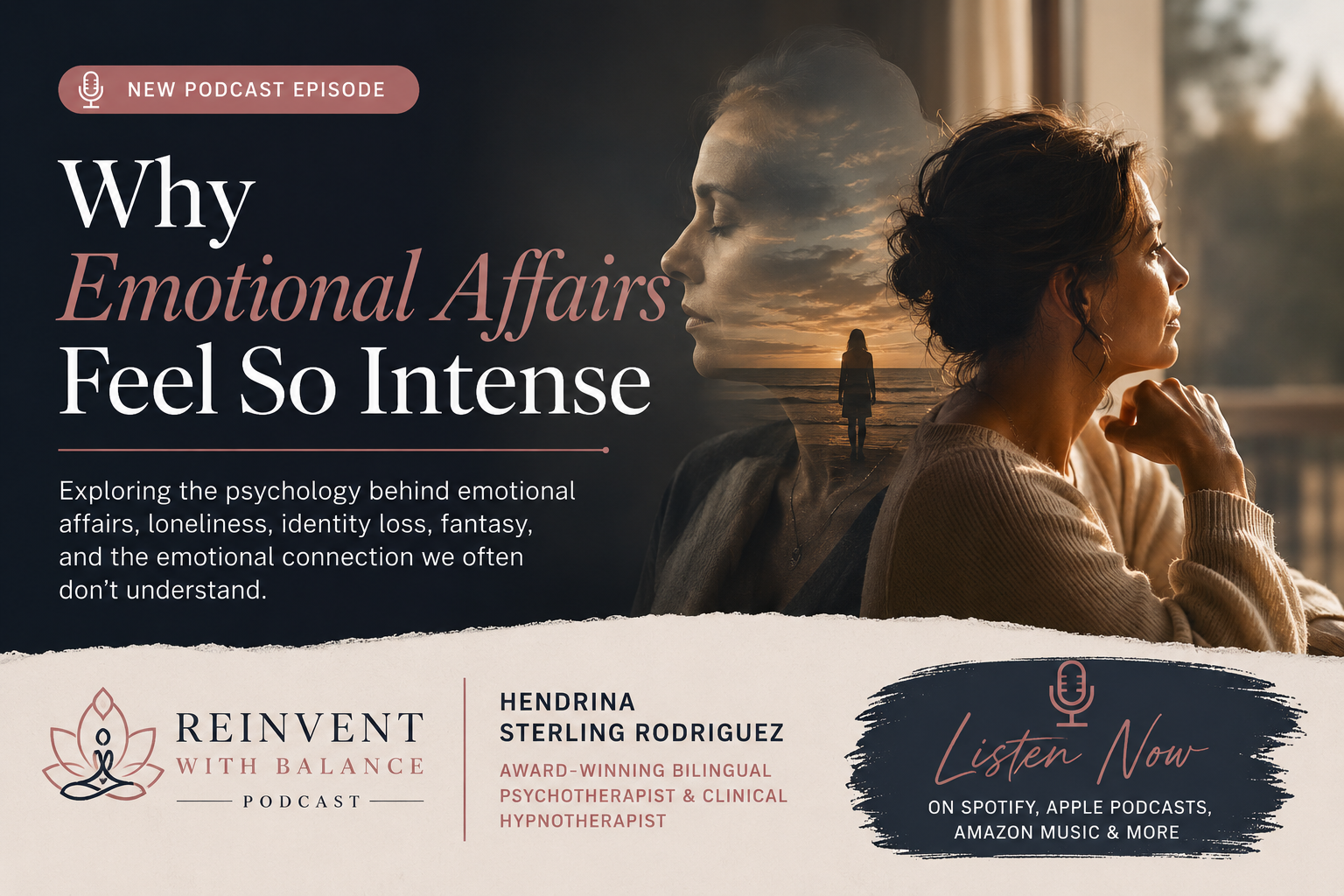
Emotional affairs are one of the most misunderstood relationship dynamics in modern relationships. Many people immediately label them as betrayal, cheating, or lack of love, but the emotional reality underneath is often far more complex. As explored in the latest episode of Reinvent With Balance, emotional affairs are not always only about another person — sometimes they reveal unmet emotional needs, identity loss, emotional loneliness, or parts of ourselves we stopped nurturing long ago.
In long-term relationships, life naturally becomes filled with responsibilities. Work, parenting, routines, bills, stress, caregiving, emotional exhaustion, and repetition can slowly reduce emotional intimacy between partners. Over time, some people begin to feel emotionally unseen, unheard, undesirable, or disconnected from themselves.
And then suddenly, someone appears who listens carefully, remembers details, responds consistently, validates emotions, or simply makes a person feel emotionally alive again.
This is why emotional affairs often feel so intense.
What Is An Emotional Affair?
An emotional affair does not always involve physical intimacy. In many situations, nothing physical has happened at all. This is why people often minimize it by saying things like:
- “We are just talking.”
- “We are only friends.”
- “Nothing inappropriate has happened.”
- “We live far away.”
- “It is harmless.”
But emotionally, a strong attachment may already be developing. The other person becomes the first person you want to message, the person whose attention excites you, or the person you emotionally open up to more than your partner.
This creates a private emotional world.
And when that emotional world begins to feel more emotionally rewarding than the actual relationship someone is living in, emotional attachment intensifies quickly.
Why Emotional Affairs Feel So Addictive
One of the reasons emotional affairs feel emotionally addictive is because they exist outside ordinary reality.
Long-term relationships carry real-life pressures:
- routines
- responsibilities
- parenting
- financial stress
- emotional history
- unresolved conflict
- exhaustion
Emotional affairs often exist outside all of that. They are concentrated forms of emotional attention and emotional stimulation.
There is:
- anticipation
- novelty
- fantasy
- emotional validation
- excitement
- secrecy
- emotional escape
This creates intensity.
But intensity is not always intimacy.
Sometimes the emotional intensity comes from finally feeling seen again after years of emotional deprivation. The emotional connection becomes less about the actual person and more about the emotional state that person creates inside us.
The Return Of The Lost Self
One of the deepest psychological aspects of emotional affairs is identity reconnection.
Many people are not only attracted to the other person. They are reconnecting with forgotten parts of themselves.
They may suddenly feel:
- attractive again
- playful again
- emotionally alive again
- desired again
- youthful again
- spontaneous again
After years of caregiving, responsibility, work stress, or emotional burnout, this emotional awakening can feel incredibly powerful.
This is especially common during:
- midlife transitions
- motherhood
- long marriages
- emotionally distant relationships
- burnout
- identity crises
- major life changes
Sometimes people are not longing only for another person.
Sometimes they are grieving themselves.
That is why one of the most important questions someone can ask is:
“What part of me comes alive around this person?”
Fantasy Vs Reality In Emotional Affairs
Fantasy is emotionally powerful because it is incomplete.
The mind fills in the missing spaces. People imagine possibilities, idealize emotional chemistry, and focus on emotional connection without the pressure of daily life.
But fantasy does not need to survive:
- parenting stress
- financial pressure
- emotional conflict
- routines
- illness
- disappointment
- long-term compatibility
This does not mean the emotions are fake. The feelings can be completely real.
However, real feelings do not always mean a relationship is emotionally sustainable in reality.
Sometimes emotional affairs are emotional signals rather than emotional instructions.
The emotional intensity may actually be revealing:
- emotional neglect
- loneliness
- emotional disconnection
- unmet needs
- identity loss
- lack of emotional intimacy
- suppressed emotional needs
Why Understanding Matters
Understanding emotional affairs is not the same as justifying betrayal.
Both truths can exist simultaneously:
- emotional affairs can deeply hurt relationships
- and emotionally vulnerable people can still become emotionally attached elsewhere
This is why therapy and self-reflection matter deeply. Emotional awareness helps people understand the emotional pathway before making impulsive decisions driven only by emotional intensity.
Listen To The Full Podcast Episode
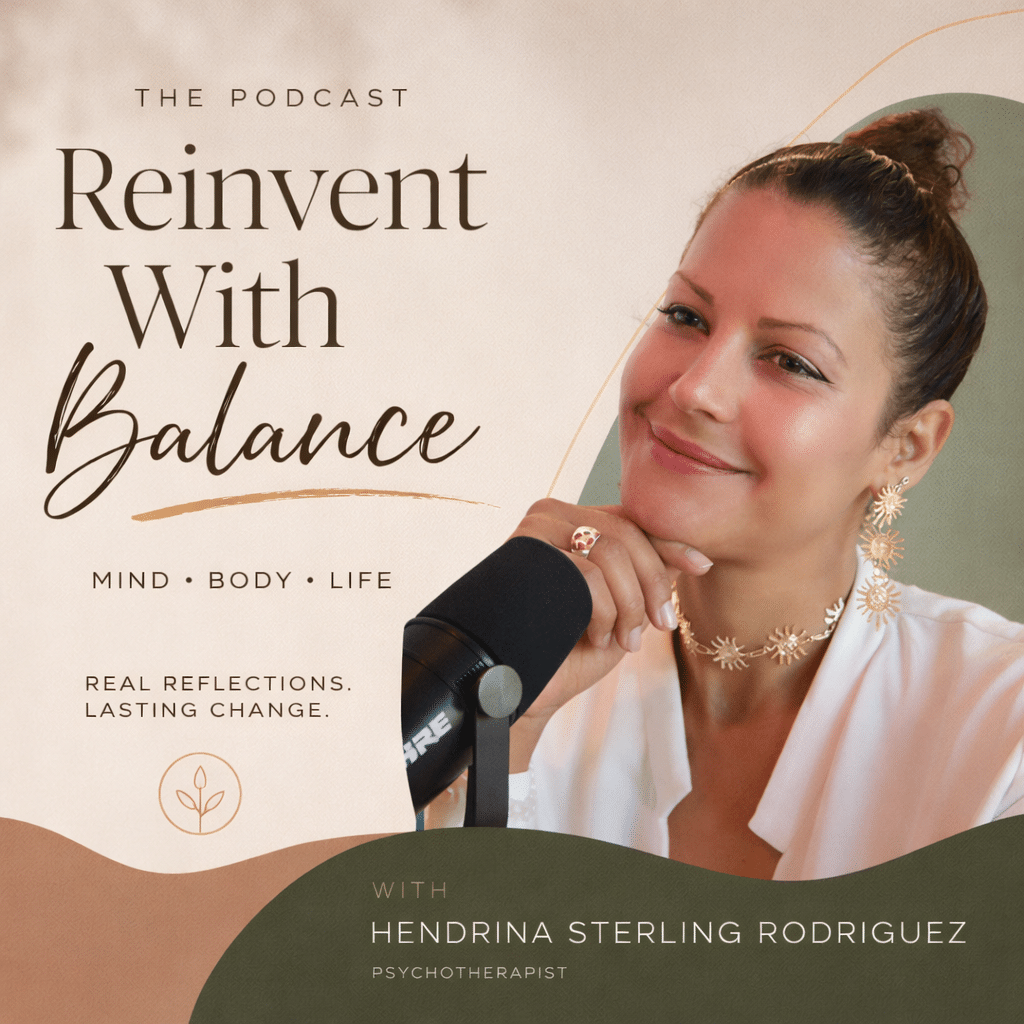
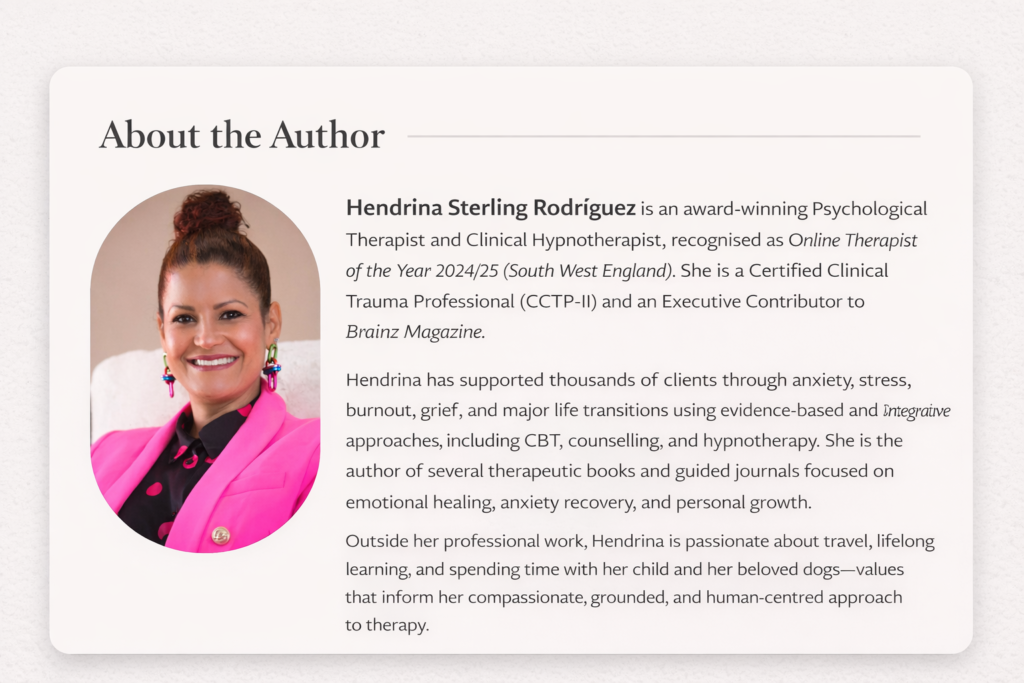
In this episode of Reinvent With Balance, award-winning bilingual psychotherapist Hendrina Sterling Rodriguez explores:
- why emotional affairs feel emotionally consuming
- emotional loneliness in long-term relationships
- fantasy versus emotional reality
- identity loss and emotional reconnection
- emotional deprivation and attachment
- the psychology behind emotional intensity
- the emotional questions people should ask themselves before making life-changing decisions
Sometimes the person who makes you feel alive is not the final answer.
Sometimes they are simply the mirror showing you the parts of yourself that have been waiting to come back.
What is an emotional affair?

An emotional affair is a deep emotional connection with someone outside your relationship that creates emotional intimacy, attachment, secrecy, or emotional dependency. It may not always involve physical intimacy, but emotionally, the connection can become very intense.
Why do emotional affairs feel so intense?
Emotional affairs often feel intense because they meet emotional needs that may have been neglected for a long time. They can create feelings of excitement, validation, emotional connection, attention, desire, and emotional aliveness.
Are emotional affairs always about love?
Not always. Sometimes emotional affairs are less about true compatibility and more about emotional loneliness, identity loss, emotional deprivation, fantasy, or reconnecting with forgotten parts of oneself.
Can good people fall into emotional affairs?
Yes. Emotional affairs can happen to loyal, responsible, and caring people. Emotional vulnerability often develops slowly through emotional distance, loneliness, lack of communication, emotional exhaustion, or feeling unseen in a relationship.
What is the difference between emotional intensity and real intimacy?
Intensity is often driven by novelty, fantasy, emotional validation, anticipation, and secrecy. Real intimacy requires emotional safety, consistency, communication, conflict resolution, compatibility, and surviving everyday life together.
Why do emotional affairs become emotionally addictive?
The emotional connection can activate powerful feelings of attention, validation, excitement, and emotional escape. Over time, people may become attached not only to the person, but also to the emotional state they experience around them.
Are emotional affairs a sign that a relationship is over?
Not necessarily. Sometimes they reveal unmet emotional needs, unresolved emotional disconnection, lack of intimacy, or personal identity struggles that need attention and honest reflection within the relationship.
How can therapy help with emotional affairs?
Therapy can help individuals and couples understand the deeper emotional patterns underneath emotional affairs, including attachment styles, emotional neglect, communication issues, identity loss, unmet needs, and emotional disconnection.
What questions should someone ask themselves during an emotional affair?
Important reflective questions include:
What emotional need is this connection fulfilling?
Am I attached to this person or to how I feel around them?
What conversations am I avoiding in my relationship?
What part of myself feels alive here?
Am I seeking clarity or emotional escape?
Where can I listen to the Reinvent With Balance podcast?
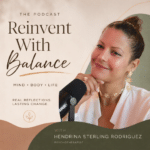
You can listen to Reinvent With Balance on Spotify, Amazon Music, Apple Podcasts, and other major podcast platforms.