
📘 TABLE OF CONTENTS
- What Is Cognitive Behavioral Therapy (CBT)?
- The Origins of Cognitive Behavioral Therapy (CBT)
- Dr. Aaron T. Beck: The Architect of Cognitive Behavioral Therapy
- How Cognitive Behavioral Therapy (CBT) Works
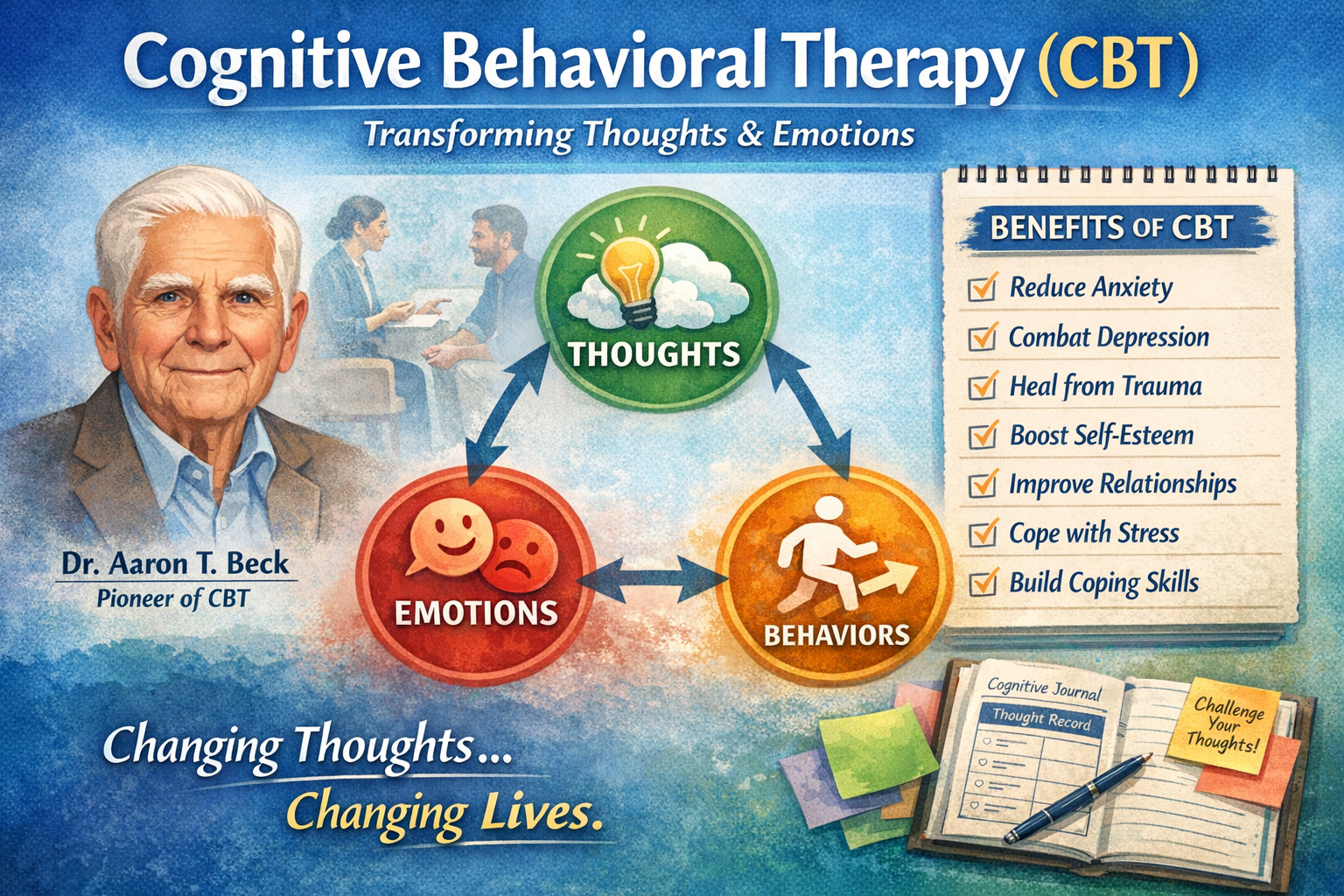
- The CBT Triangle: Thoughts, Emotions, Behaviors
- 7 Powerful Benefits of Cognitive Behavioral Therapy (CBT)
- Who Can Benefit from Cognitive Behavioral Therapy (CBT)?
- CBT Techniques Used in Therapy
- How I Use Cognitive Behavioral Therapy in My Practice
- Conclusion: Why Cognitive Behavioural Therapy Matters Today
- External & Internal Links

Download your FREE 7-Day Anxiety Reset Workbook
Take a gentle first step toward greater calm and clarity.
This 7-day guide uses simple, practical CBT tools to help you understand your anxiety, recognise unhelpful thinking patterns, and build more balanced, compassionate ways of responding to stress.
Enter your email to receive your free workbook instantly. You’ll also receive my weekly reflections on mental health, anxiety, and emotional wellbeing — thoughtful guidance sent straight from my desk to yours. You can unsubscribe at any time.
I’m honoured to accompany you on this journey.
— Hendrina Sterling Rodríguez
1. What Is Cognitive Behavioural Therapy (CBT)?
Cognitive Behavioral Therapy (CBT) is a structured, goal-oriented, and evidence-based psychological approach that helps individuals understand how their thoughts influence their emotions and behaviors. Unlike traditional psychodynamic therapy, which often explores past experiences in depth, Cognitive Behavioral Therapy (CBT) focuses on the present moment, identifying unhelpful thinking patterns and replacing them with more balanced, realistic perspectives. Cognitive Behavioral Therapy (CBT) equips individuals with tools to manage their mental health effectively.
In my clinical work, I see Cognitive Behavioral Therapy (CBT) as a practical and empowering framework that equips people with lifelong skills rather than temporary relief. It is collaborative, transparent, and highly adaptable across cultures, diagnoses, and personal circumstances.
CBT is widely used for anxiety, depression, stress, trauma, burnout, relationship difficulties, and self-esteem challenges. Its structured nature makes it particularly effective for individuals who prefer clarity, direction, and measurable progress.
2. The Origins of Cognitive Behavioral Therapy (CBT)
Cognitive Behavioral Therapy (CBT) emerged in the 1960s as a revolutionary shift in psychotherapy. At that time, psychoanalysis and behaviorism dominated the psychological landscape. Psychoanalysis emphasized unconscious processes, while behaviorism focused purely on observable actions.
CBT bridged this divide by integrating cognition (thoughts) with behaviour (actions). This synthesis marked a turning point in mental health treatment, making therapy more scientific, measurable, and accessible.

3. Dr. Aaron T. Beck: The Architect of Cognitive Behavioral Therapy
Cognitive Behavioral Therapy (CBT) was pioneered by Dr. Aaron T. Beck, a psychiatrist and professor at the University of Pennsylvania, widely regarded as the “Father of CBT.”
Originally trained in psychoanalysis, Beck became dissatisfied with its lack of empirical evidence. Through his clinical research with depressed patients, he discovered that their internal self-talk contained consistent patterns of negativity, distortion, and cognitive bias.
He identified what he called automatic negative thoughts, such as:
• “I always fail.”
• “Nobody likes me.”
• “Something bad will happen.”
Beck found that these thoughts were not facts but interpretations, often inaccurate and overly pessimistic. This insight led to the development of Cognitive Behavioral Therapy (CBT), which teaches clients to:
• Recognize distorted thinking
• Challenge irrational beliefs
• Replace them with balanced alternatives
His work transformed psychology and laid the foundation for modern, evidence-based therapy.
(Source: https://www.goodtherapy.org/blog/Dr-Aaron-Beck-Father-Cognitive-Behavioral-Therapy)
4. How Cognitive Behavioral Therapy (CBT) Works
Cognitive Behavioral Therapy (CBT) operates on a simple but profound principle:
“How we think affects how we feel, and how we feel affects how we act.”
In CBT, I work with clients to identify patterns such as:
• Catastrophizing
• Black-and-white thinking
• Overgeneralization
• Personalization
• Mind reading
These cognitive distortions often maintain anxiety, depression, and emotional distress. By restructuring these thoughts, clients experience emotional relief and behavioural change.

5. The CBT Triangle: Thoughts, Emotions, Behaviors
A core model in Cognitive Behavioral Therapy (CBT) is the CBT Triangle:
Thoughts → Emotions → Behaviors
For example:
• Thought: “I will embarrass myself.”
• Emotion: Anxiety.
• Behavior: Avoiding social situations.
CBT helps break this cycle by replacing the thought with:
• “I might feel nervous, but I can handle it.”
This leads to calmer emotions and more confident behaviour.
6. 7 Powerful Benefits of Cognitive Behavioral Therapy (CBT)
1. Reduces Anxiety and Panic
CBT teaches individuals to identify and challenge anxious thoughts before they escalate into panic.
2. Improves Depression Symptoms
By addressing negative self-beliefs, CBT helps clients develop healthier self-perceptions.
3. Enhances Emotional Regulation
Clients learn to observe emotions without being overwhelmed by them.
4. Strengthens Self-Esteem
CBT encourages realistic self-assessment instead of harsh self-criticism.
5. Supports Trauma Recovery
CBT techniques such as exposure therapy help individuals process distressing memories safely.
6. Improves Relationships
CBT enhances communication, boundary setting, and emotional intelligence.
7. Provides Lifelong Coping Skills
Unlike some therapies, CBT equips individuals with tools they can use long after therapy ends.
7. Who Can Benefit from Cognitive Behavioral Therapy (CBT)?
Cognitive Behavioral Therapy (CBT) is effective for:
• Anxiety disorders
• Depression
• PTSD
• OCD
• Burnout
• Phobias
• Insomnia
• Chronic stress
• Relationship conflict
Its versatility makes it one of the most widely recommended therapies worldwide.
8. CBT Techniques Used in Therapy
In my practice, I integrate several CBT tools, including:
• Thought records
• Behavioral experiments
• Exposure exercises
• Cognitive restructuring
• Mindfulness techniques
• Socratic questioning
• Goal setting and action planning
These interventions help clients build insight and agency.
9. How I Use Cognitive Behavioral Therapy in My Practice
I apply Cognitive Behavioral Therapy (CBT) in a compassionate, client-centered way. I combine CBT with emotional regulation techniques, hypnotherapy, and reflective exercises to deepen transformation.
My approach is structured but flexible, ensuring that each client feels understood, supported, and empowered.
10. Conclusion: Why Cognitive Behavioral Therapy Matters Today
Cognitive Behavioral Therapy (CBT) remains one of the most scientifically validated therapeutic approaches in psychology. Its practical, skill-based framework makes it accessible, effective, and life-changing.
Whether you are struggling with anxiety, depression, or simply seeking personal growth, CBT offers a clear pathway toward mental clarity, emotional balance, and behavioral alignment

References
• Dr. Aaron T. Beck – GoodTherapy:
https://www.goodtherapy.org/blog/Dr-Aaron-Beck-Father-Cognitive-Behavioral-Therapy
• Beck Institute for Cognitive Behavior Therapy:
https://beckinstitute.org/
• American Psychological Association on CBT:
https://www.apa.org/ptsd-guideline/patients-and-families/cognitive-behavioral
Cognitive Behavioral Therapy (CBT) offers a variety of techniques that can be tailored to fit individual needs. By practicing these techniques, clients engage more deeply with the principles of Cognitive Behavioral Therapy (CBT) and foster personal growth.
In my practice, I emphasise the importance of Cognitive Behavioral Therapy (CBT) principles in fostering resilience and coping strategies that are beneficial long after therapy concludes. This long-term empowerment is a hallmark of successful Cognitive Behavioral Therapy (CBT).
Cognitive Behavioral Therapy (CBT) is particularly effective in addressing various mental health issues, such as anxiety, depression, and stress-related disorders. Understanding the principles of Cognitive Behavioral Therapy (CBT) can significantly enhance your journey toward mental wellbeing.
Incorporating Cognitive Behavioral Therapy (CBT) into your daily routine can lead to lasting changes in behaviour and thought patterns, promoting a healthier mindset.
The adaptability of Cognitive Behavioral Therapy (CBT) ensures that it can be used by individuals from various backgrounds, making it universally applicable in today’s diverse society.
Engaging with Cognitive Behavioral Therapy (CBT) not only provides immediate relief but also equips you with strategies for managing future challenges.
Ultimately, understanding and applying the principles of Cognitive Behavioral Therapy (CBT) can lead to transformative changes in your life.
Cognitive Behavioral Therapy (CBT) remains a cornerstone of modern psychological practice, representing a blend of empirical research and practical application.