Being Human Is Often Misunderstood in the Healing Process
Being human is often misunderstood as something we must outgrow in order to heal. Many people come to therapy with a quiet belief that there must be something wrong with them because they still feel deeply, struggle emotionally, or cannot “move on” fast enough. They want clarity, peace, confidence, and emotional stability. Beneath that desire is often an unspoken pressure: to be better than human.
In therapeutic work, this pressure can become one of the biggest obstacles to genuine healing.

Being Human and the Myth of “Perfect Healing”
Modern culture often presents healing as improvement. Be calmer. Be wiser. Be less reactive. Be more detached. Be more spiritual.
While growth is important, this mindset can lead to what psychology refers to as spiritual bypassing—using insight, positivity, or spirituality to avoid emotions that feel uncomfortable or inconvenient. Instead of allowing grief, people jump to acceptance. Instead of naming anger, they intellectualize it. Instead of acknowledging fear, they push themselves into confidence.
From a clinical perspective, this does not resolve emotional distress. It often creates emotional suppression, which keeps the nervous system activated and the body in a state of chronic stress.
Healing is not about escaping being human.
Healing is about learning how to live inside your humanity without abandoning yourself.
Why Being Human Is Essential for Emotional Integration
Being human means complexity. It means being able to hold more than one emotional truth at the same time.
You can:
- Love someone and still recognize they are not right for you
- Be successful and still feel lonely or uncertain
- Want closeness and still need boundaries
- Be strong and still need support
- Be insightful and still feel emotionally overwhelmed
In therapy, this capacity is called emotional integration. Emotional integration allows individuals to experience conflicting emotions without collapsing into shame, avoidance, or self-judgment.
Many high-functioning people struggle not because they lack insight, but because they have learned to override their emotional reality in order to survive, succeed, or maintain stability. Over time, this disconnection often shows up as anxiety, burnout, relationship dissatisfaction, or a sense of emptiness.
Being Human in Therapy: From Avoidance to Responsibility
One of the most important misunderstandings about therapy is the belief that it exists to make discomfort disappear. Therapy is not a shelter from reality. It is a space for honest reflection.
Being human means telling the truth—first to yourself.
Many people ask in therapy, “What should I do?” or “How do I stop feeling this way?” But often, the more important questions are:
- What am I avoiding by staying exactly where I am?
- Where am I confusing patience with self-abandonment?
- What emotion am I trying to outgrow instead of feel?
Waiting is not a neutral position. Avoidance is not protection. When we stop choosing, life continues to move forward without us.
Therapy supports people in developing emotional regulation, self-responsibility, and clarity—not by forcing decisions, but by helping individuals face the truth they already sense.
Why People Feel Relieved When Someone Is Simply Human
When someone allows themselves to be fully human—present, imperfect, emotionally honest—it creates nervous system safety. In trauma-informed therapy, this is known as co-regulation. The body senses safety not through perfection, but through authenticity.
This is why people often leave therapy sessions not saying, “You fixed me,” but instead:
- “I felt understood.”
- “I felt seen.”
- “I felt less alone.”
Humanity is relatable. Perfection is not.
The Cost of Trying to Be “Healed” Too Soon
Many people learned early in life that emotions were unsafe or inconvenient. As a result, they adapted by becoming emotionally self-sufficient, overly patient, highly accommodating, or detached.
In adulthood, these adaptations may appear as:
- Staying in emotionally unavailable relationships
- Waiting for others to change
- Minimizing personal needs
- Intellectualizing pain instead of processing it
These patterns are not personal failures. They are survival strategies. However, strategies that once protected you can later keep you stuck.
Being human means recognizing when a coping strategy no longer serves you.
Coming Home to Being Human Is Coming Home to Choice
Being human does not mean being passive. It means taking responsibility for your life without cruelty toward yourself.
You do not need to be fully healed to be worthy.
You do not need to have everything figured out to move forward.
You do not need to transcend your emotions to live well.
Sometimes the most powerful moment in therapy is when someone says:
“This is where I am—and I’m willing to start from here.”
That moment marks the beginning of real change.
A Final Reflection on Being Human
Coming home to being human is not a step backward. It is a return to truth, agency, and self-respect.
Healing does not ask you to abandon your humanity. It asks you to inhabit it fully—with honesty, responsibility, and compassion.
From that place, growth becomes possible. Not rushed. Not forced. But grounded.
Want support with this work?
This process often unfolds in individual therapy and couples therapy, especially for people navigating relationship uncertainty, emotional burnout, life transitions, or long-standing patterns that no longer serve them.
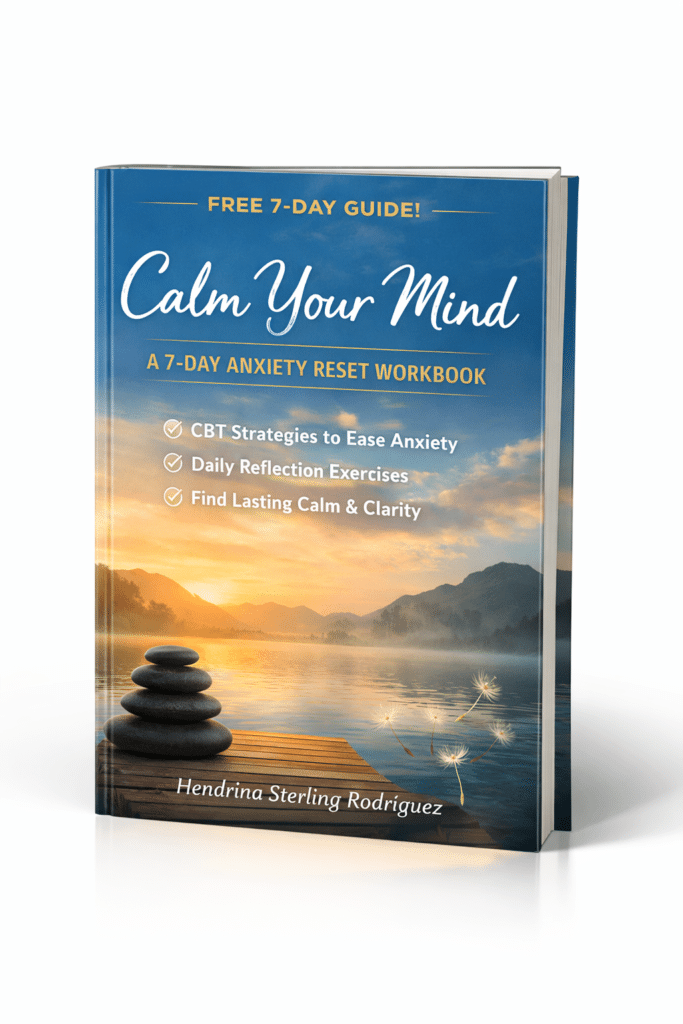
Download your FREE 7-Day Anxiety Reset Workbook
Take a gentle first step toward greater calm and clarity.
This 7-day guide uses simple, practical CBT tools to help you understand your anxiety, recognise unhelpful thinking patterns, and build more balanced, compassionate ways of responding to stress.
Enter your email to receive your free workbook instantly. You’ll also receive my weekly reflections on mental health, anxiety, and emotional wellbeing — thoughtful guidance sent straight from my desk to yours. You can unsubscribe at any time.
I’m honoured to accompany you on this journey.
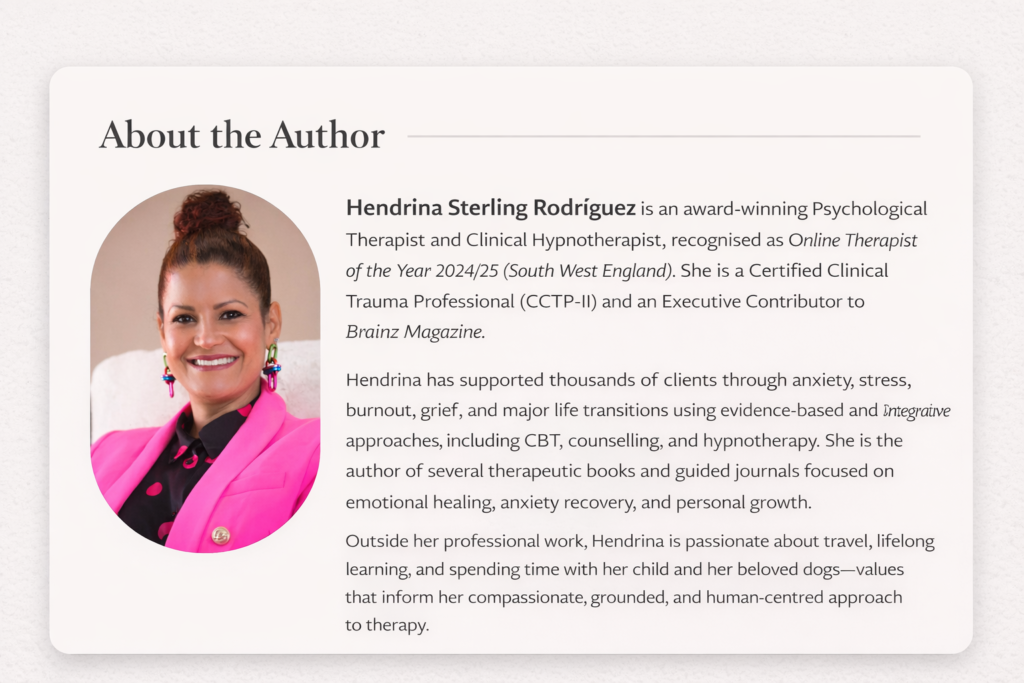
— Hendrina Sterling Rodríguez
Inspiration source: Ram Dass Here & Now – Coming Home to Being Human
https://www.ramdass.org/ram-dass-here-and-now-ep-292-coming-home-to-being-human/